Austin's cost of living is one of the most-searched questions by anyone considering a move here — and one of the most misunderstood.
The short answer: Austin is meaningfully less expensive than San Francisco, Seattle, and New York. It is more expensive than most other Texas cities and, depending on lifestyle, it can surprise people who arrived expecting broad affordability.
The full picture requires looking at costs category by category — because Texas's unusual tax structure means the numbers do not look the way buyers from income-tax states expect them to.
The Texas Trade-Off: Income Tax vs. Property Tax
Texas has no state income tax. For high earners relocating from California (top marginal rate 13.3%), New York (up to 10.9%), or New Jersey (up to 10.75%), that difference represents significant annual savings — often $15,000 to $60,000 per year depending on income.
The trade-off is property taxes. Texas property taxes rank among the highest effective rates in the country. Most Austin homeowners in Travis County pay between 1.8% and 2.4% of assessed value annually. On a $600,000 home, that is $10,800 to $14,400 per year — a meaningful monthly expense that buyers from lower-rate states consistently underestimate.
For most professional households relocating from high-income-tax states, the math strongly favors Texas overall. But 'no state income tax' does not mean Austin is inexpensive — it means Austin is taxed differently. Both sides of the equation matter.
What Housing Actually Costs in Austin in 2026
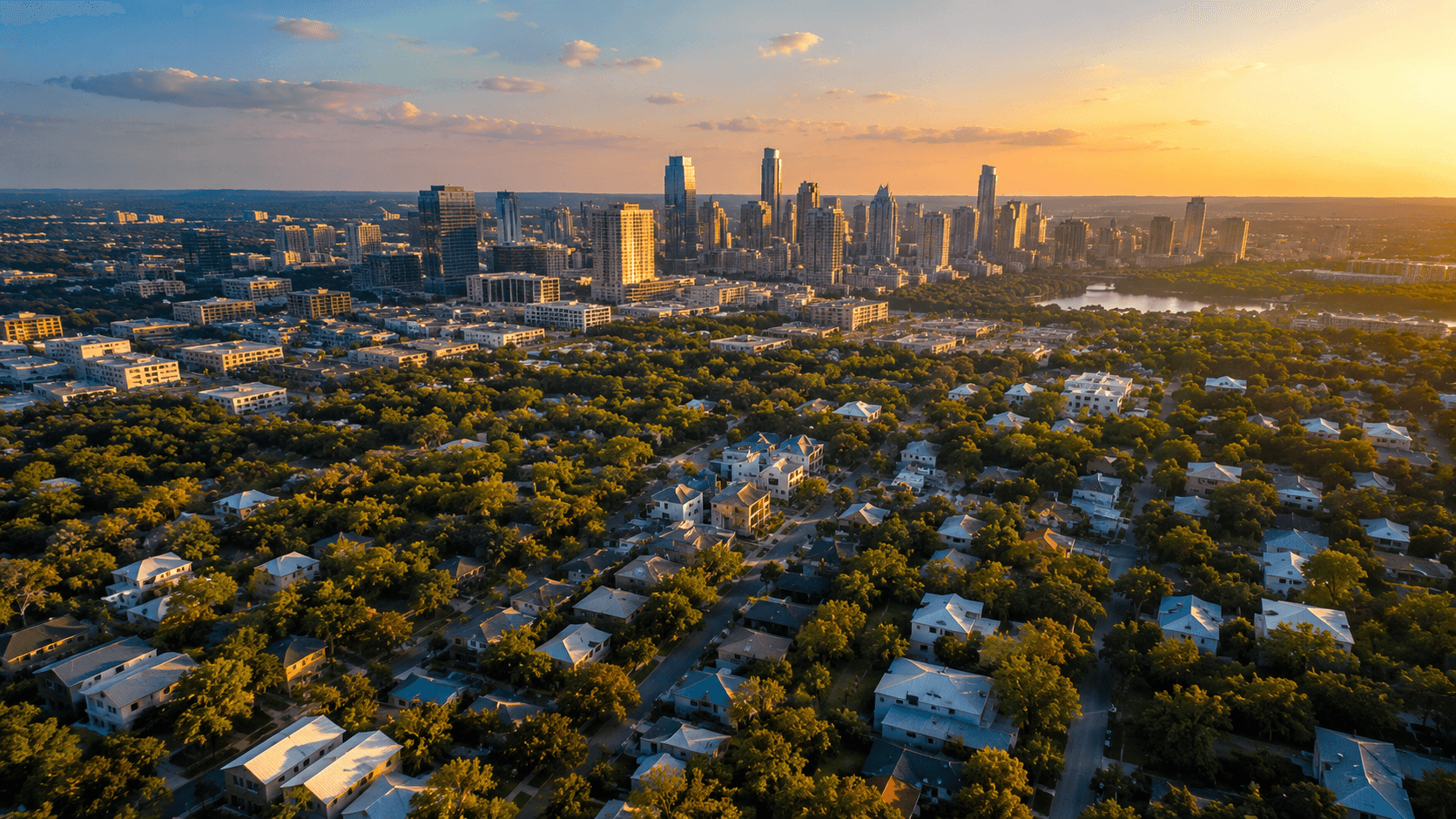
Austin's housing market moderated from its 2022 peak, but prices remain well above the national median. The median sale price in the City of Austin proper in 2026 is approximately $525,000. Location drives substantial variation: central neighborhoods like Barton Hills and Zilker carry medians above $850,000, while outer communities in Pflugerville, Manor, and Buda offer homes in the $340,000 to $450,000 range.
Mid-ring neighborhoods — Mueller, Windsor Park, north Austin along the 183 corridor — sit between $450,000 and $650,000, with good access to major employment centers.
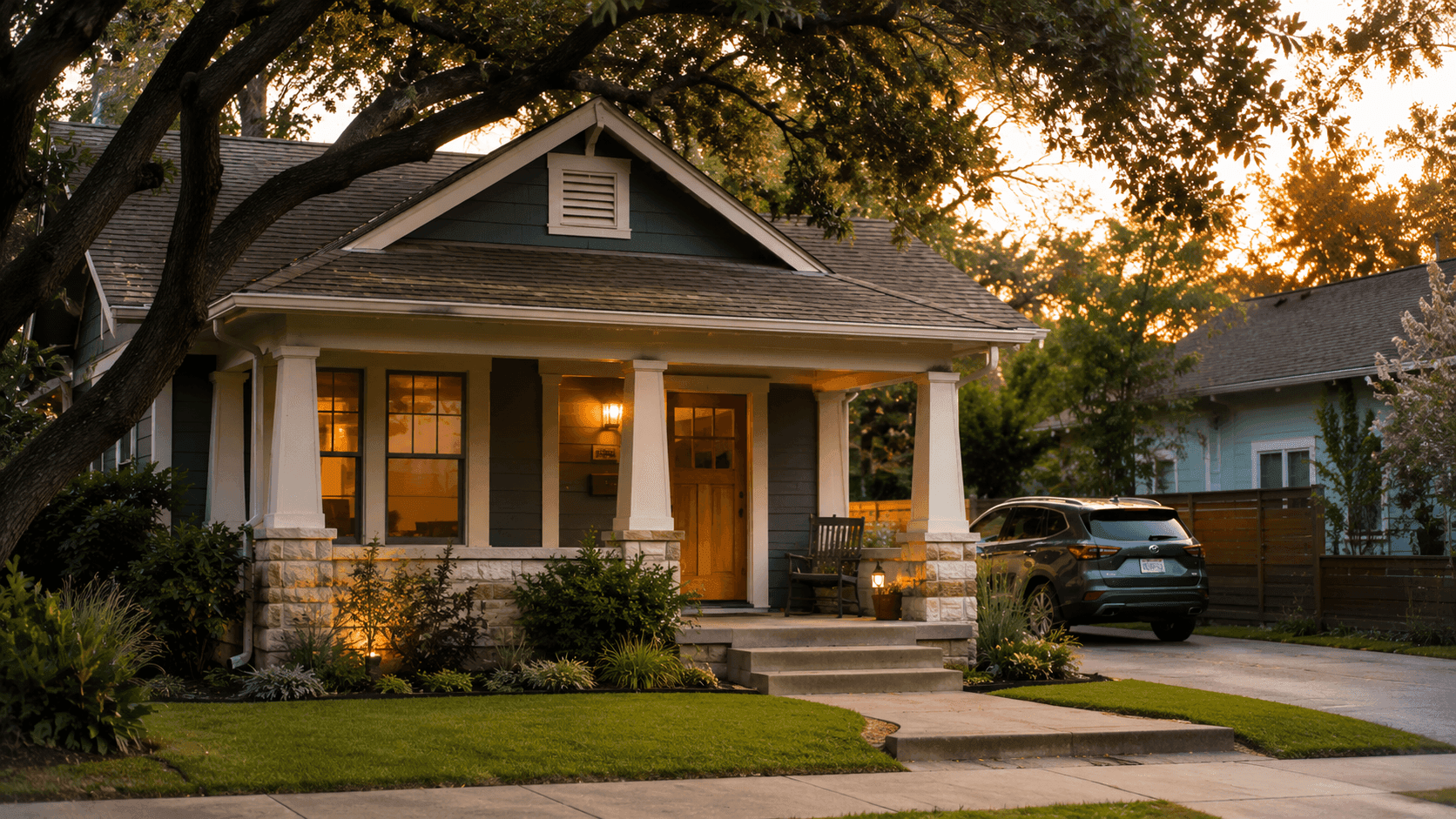
At a 30-year fixed rate near 6.5% and a 20% down payment on a $525,000 home, principal and interest runs approximately $2,650 per month. Add property taxes ($900 to $1,200/month), homeowner's insurance ($150 to $250/month), and a monthly maintenance reserve of $300 to $400, and the all-in monthly cost of owning a median Austin home falls between $4,000 and $4,500.
Renting vs. Buying in Austin in 2026
Austin's rental market has softened meaningfully from 2022 peaks. The average rent for a one-bedroom apartment in Austin in 2026 is approximately $1,600 to $1,900 per month in most neighborhoods — down from over $2,200 at peak. Two-bedroom apartments in desirable corridors like South Congress, East Riverside, and East Austin run $2,200 to $2,800 per month.
The rent-vs-buy calculus in 2026 Austin is closer than it was during the low-rate years. Buyers planning to stay five or more years still typically find ownership favorable once appreciation and tax benefits are factored in. For buyers with shorter time horizons or uncertain neighborhood priorities, renting allows flexibility that buying does not.
Austin Utilities: Budget Meaningfully for Summer
Austin Energy serves most of the city. The critical number for new residents: summer electricity bills in Austin are genuinely high. Central Texas heat is intense from May through September, and air conditioning runs almost continuously.
A 2,000-square-foot home should budget $200 to $350 per month for electricity during summer. Spring and fall bills drop to $80 to $130 monthly. Annual electricity costs for a typical Austin home average $2,000 to $3,000.
Water and sewer runs $60 to $100 per month for most households. Natural gas for heating and cooking averages $50 to $80 per month in winter. Internet is $60 to $90 per month for standard service.
Combined monthly utility spending for a typical Austin home: $350 to $550 in moderate months, $500 to $700 in summer.
Food, Dining, and Groceries in Austin
Austin's food scene is one of the city's defining qualities — and one of its more expensive features. The city has developed nationally recognized depth in barbecue, tacos, elevated casual dining, and a growing fine-dining community.
A sit-down dinner for two at a mid-range Austin restaurant runs $65 to $100 including drinks and tip. Upscale dining is $120 to $220 or more per person. Austin's food truck culture remains active and more accessible — most truck entrees price between $12 and $20.
Grocery costs align roughly with national averages. HEB is Austin's beloved and genuinely competitive full-service grocer. Whole Foods (headquartered in Austin) and Central Market run higher. A household of two can expect to spend $650 to $900 per month on groceries depending on diet and shopping habits.
Transportation: Austin Runs on Cars
Austin is a car-dependent city. MetroRail provides one light rail corridor from Leander to downtown, and Project Connect is expanding rapid transit capacity. But for most residents — particularly those outside the immediate downtown core — a personal vehicle is functionally necessary.
Gas prices in Austin track national averages, generally $3.00 to $3.50 per gallon in 2026. A household driving 15,000 miles annually spends approximately $2,000 to $2,500 per year on fuel. Total vehicle operating costs including insurance, maintenance, and registration average $6,000 to $9,000 per vehicle per year.
Two-car households — common in suburban and family-oriented areas — should budget $12,000 to $18,000 annually in total transportation costs. This is a meaningful line item that is easy to underestimate during the planning phase.
Healthcare in Austin
Austin has grown substantially as a healthcare market, with Ascension Seton, St. David's HealthCare, Baylor Scott & White, and Dell Seton Medical Center maintaining significant presence. Employer-based healthcare costs track national averages.
Residents purchasing individual or family plans through the ACA marketplace should budget $400 to $800 per month for mid-tier coverage depending on household size and income. Out-of-pocket medical costs are broadly in line with other major metros.
How Austin Compares to Other Major Cities
For households relocating from San Francisco or the Bay Area, Austin represents a substantial cost reduction even accounting for higher property taxes. The same budget that buys a modest Bay Area condo buys a well-appointed house in a desirable Austin neighborhood. No state income tax saves a California-level earner $15,000 to $50,000 per year.
Compared to New York City: Austin housing is dramatically less expensive, commutes are car-based rather than transit-driven, and housing comes with meaningfully more space. For a New York household, the income tax savings and housing differential are typically significant.
Compared to Dallas or Houston: Austin is more expensive. The city's reputation, tech-sector salary base, and lifestyle appeal command a premium over comparable Texas metros. Remote workers not tied to Austin employers may find better housing value elsewhere in Texas.
Compared to Denver or Nashville: Austin is broadly cost-comparable on housing. Differences are driven more by tax structure and employer market than fundamental lifestyle cost.
The Bottom Line on Austin's Cost of Living
Austin is an expensive city for Texas and a competitive value relative to coastal metros. The households who benefit most from Austin's cost structure are typically high earners relocating from states with significant income taxes — they capture meaningful savings while accessing a housing market and quality of life that would cost far more in California or New York.
For households relocating from lower-cost markets, Austin's housing prices, property taxes, utilities, and car dependence can feel genuinely expensive. The cost of living is real and should be modeled honestly before committing to a purchase.
The most accurate framing: Austin is a city where your dollar goes significantly farther than in coastal gateway cities, but not as far as in most other parts of Texas — and where the quality of life, employer base, and cultural richness command a genuine premium.