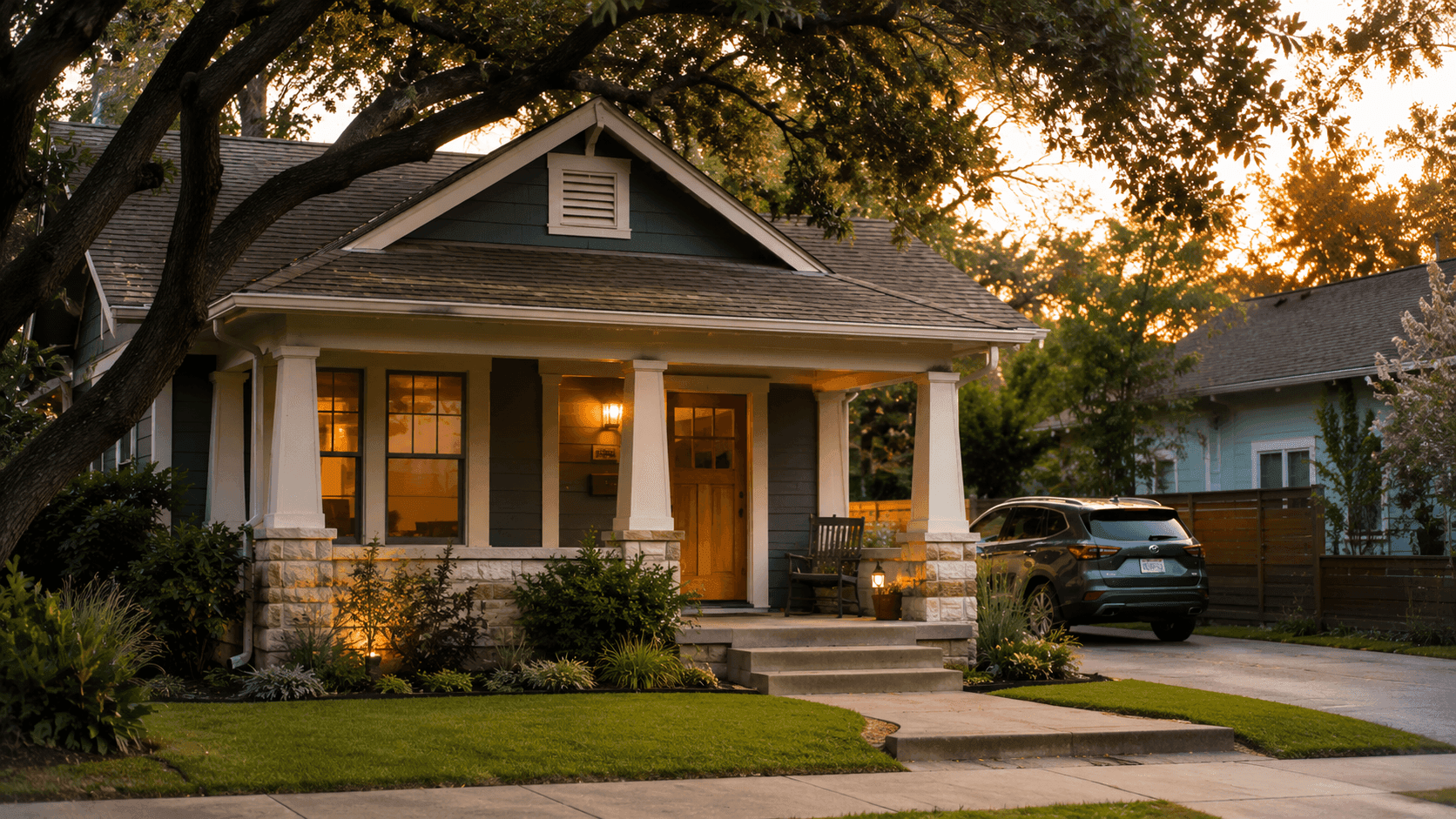
Relocating to Austin offers a wealth of opportunity — but the city's diversity of neighborhoods means that where you land shapes everything: your commute, your community, your daily pace.
The most common mistake relocation buyers make is treating Austin as a single market. It is not. It is a network of distinct micro-markets, each with its own character, pricing, and long-term trajectory.
Three neighborhoods consistently anchor relocation conversations at the upper end of the market.
Tarrytown offers scenic views, proximity to downtown, and a community reputation built on excellent schools and a sophisticated residential environment. Pricing generally exceeds Austin's median, reflecting that sustained demand.
Westlake is defined by upscale homes, hilltop views, top-rated schools, and a quiet pace that appeals to families and professionals seeking an elevated residential experience. It consistently ranks among Austin's highest-priced micro-markets.
Barton Hills balances urban access with outdoor lifestyle — close to Zilker Park and Barton Springs Pool, with a community of buyers who prioritize nature alongside city convenience.
Commute patterns matter more in Austin than in many comparable cities. The metro still relies heavily on cars, and average drive times vary significantly by location. Neighborhoods closer to major employment corridors — or served by MetroRail — offer meaningfully different daily experiences than areas requiring highway dependence.
Relocation buyers should map their commute realities before committing to a neighborhood: Where is primary employment located? What does the drive look like at 8am versus 6pm? Are public transit options accessible? Does commute length align with lifestyle priorities?
Micro-markets near downtown showing strong long-term value for relocation buyers include East Riverside, which is undergoing significant commercial and residential revitalization, and South Congress, which combines cultural vibrancy with strong investment fundamentals.
Thorough relocation planning — pairing community research with commute mapping and pricing analysis — is what separates buyers who thrive in Austin from those who have to relocate again two years later.