For most of Austin's history, the city's identity was anchored in its urban core — downtown, South Congress, East Austin, and the neighborhoods radiating from Barton Springs and Lady Bird Lake.
That center of gravity has shifted. North Austin, anchored by Apple's sprawling campus and The Domain mixed-use district, has become the city's second major employment hub — and a fully realized residential destination in its own right.
For buyers considering Austin, understanding north Austin is no longer optional. It is home to some of the city's largest employers, strongest residential growth, and a lifestyle that competes directly with the urban core on amenities — if not on character.
Why North Austin Matters: The Employment Anchor
The Domain and surrounding north Austin corridor is home to a concentration of major employers that rivals downtown's tech sector footprint. Apple's 133-acre campus on North Burnet Road employs more than 6,000 people with ongoing expansion. Indeed — the global job search platform — is headquartered in north Austin. Amazon, Oracle, Google, and dozens of technology and financial services firms maintain offices in the corridor.
The practical implication for buyers: a household with employment in north Austin faces a meaningfully different commute decision than one working downtown. Buying in Barton Hills to commute to Apple's campus adds 30 to 45 minutes each way during peak hours. Buying in a north Austin community — Rattan Creek, Milwood, Great Hills, or northwest-edge neighborhoods like Anderson Mill — changes the calculus entirely.
The Domain: Austin's Second Downtown
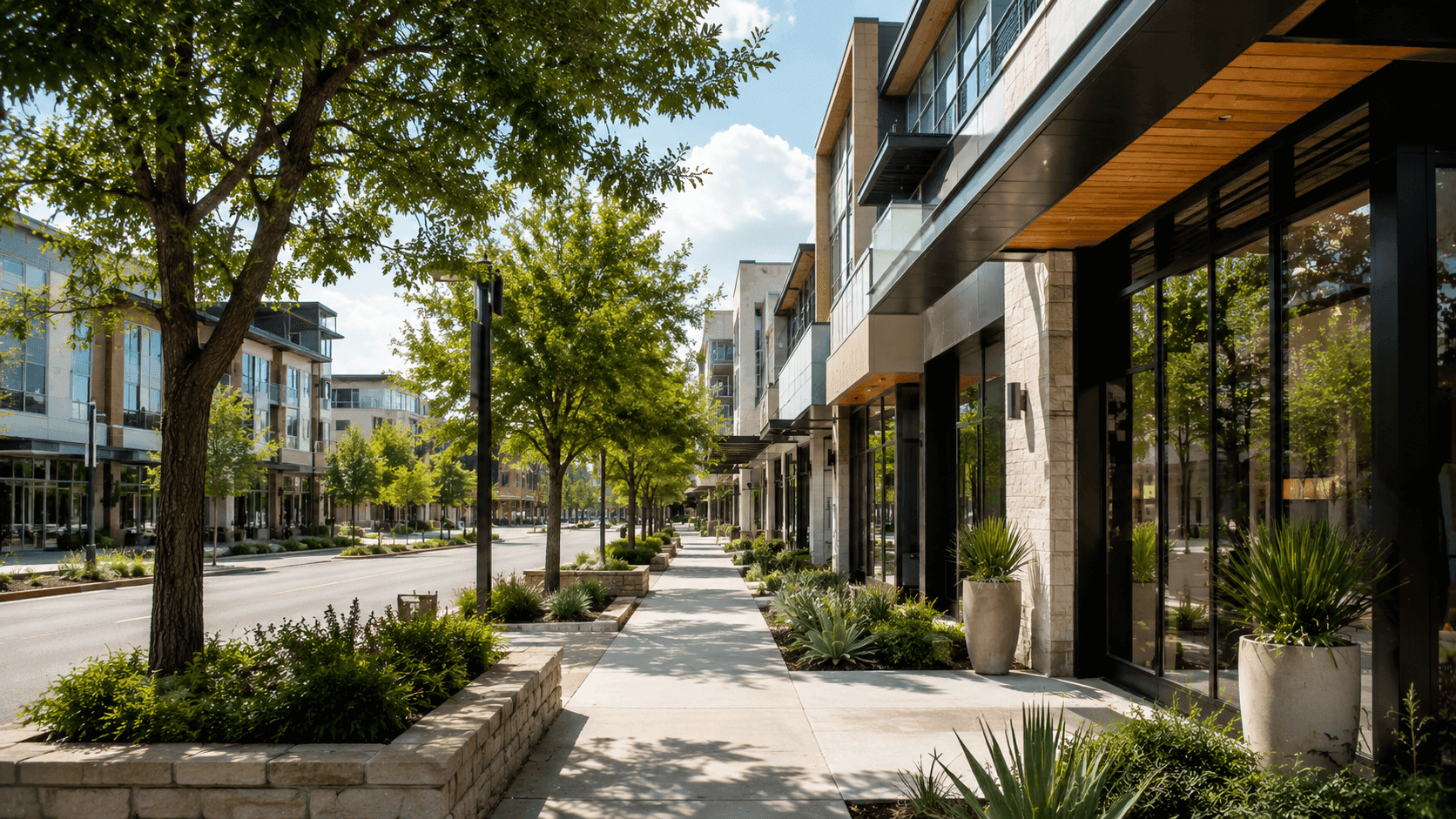
The Domain is a 300-acre mixed-use development that has grown into Austin's most significant retail and entertainment district outside of downtown. It includes a walkable retail center with major flagship stores, more than 50 restaurants ranging from casual to nationally recognized, a Whole Foods anchor, hotel properties, and office towers.
For residents of surrounding neighborhoods, the Domain provides an urban lifestyle experience — walkable dining, entertainment, and amenities — without downtown Austin traffic. The area has developed a critical mass of residential options: luxury apartments, townhome communities, and single-family neighborhoods within a short drive or walk of the retail core.
Neighborhoods in North Austin's Residential Core
North Austin encompasses several distinct residential neighborhoods, each with different character and price points.
The Arboretum area — surrounding the Arboretum retail center north of the Domain — contains established single-family neighborhoods with mature tree cover and larger lot sizes. Great Hills, Balcones Woods, and Northwest Hills offer homes with established landscaping, multiple living areas, and a suburban pace that coexists with proximity to tech employment.
Closer to the Domain, newer townhome communities and condominium developments have added walkable housing stock for buyers who want Domain adjacency without the fully suburban character of farther-out communities.
Farther north — Milwood, Rattan Creek, Anderson Mill — the residential fabric becomes more traditionally suburban, with larger single-family lots and more traditional neighborhood layouts. These communities offer more square footage for the dollar and good access to the 183 Tech Corridor and Mopac.
Schools in North Austin: Leander ISD and Austin ISD
School district assignment is more complex in north Austin than in many parts of the city, and it has a meaningful impact on pricing.
Portions of north Austin — particularly areas north of 183 toward Cedar Park and Leander — fall within Leander ISD, one of the region's strongest and fastest-growing districts. Vandegrift High School and Vista Ridge High School consistently rank among Leander ISD's top campuses. For families, Leander ISD assignment in north Austin offers strong school quality at a lower price point than Eanes ISD in Westlake.
Areas within the 78759 and 78750 zip codes closer to the urban core typically fall within Austin ISD. School performance within AISD varies more than in Leander ISD — verifying the specific campus assignment for a given address is essential before purchasing.
What Home Prices Look Like in North Austin
North Austin offers a broad price range depending on neighborhood and product type. Single-family homes in the Great Hills and Northwest Hills area — established neighborhoods with larger lots and mature trees — range from $550,000 to $900,000 depending on size and condition.
Neighborhoods farther north — Milwood, Rattan Creek, Four Points — offer single-family homes in the $450,000 to $700,000 range. The Four Points area west of 620 has seen significant new construction and infill development and offers a mix of older homes and newly built product.
Townhomes and condominiums near the Domain and Arboretum range from $350,000 to $600,000 for smaller attached product. For buyers priced out of the 78704 zip code but seeking urban amenities, north Austin's Domain-adjacent neighborhoods provide a compelling alternative — lower prices, more new inventory, and direct access to the city's largest employer cluster.
Commute Realities from North Austin
North Austin commute realities depend entirely on destination. For Domain and north Austin employers, most north Austin neighborhoods offer a short, low-stress commute — often 10 to 20 minutes even at peak hours.
Commuting from north Austin to downtown or South Congress during morning rush is a different experience. Mopac (Loop 1) and I-35 are the primary arteries, and both experience significant congestion. A north Austin to downtown commute that takes 20 minutes at 10am routinely takes 40 to 50 minutes at 8am.
MetroRail's Red Line connects Leander to downtown Austin via the north Austin corridor. For buyers who can structure their schedule around rail, it provides a genuine alternative to driving — though frequency and coverage remain limited.
Who North Austin Is Right For
North Austin is the most compelling for buyers whose employment is anchored in the Domain, the Arboretum, or the 183 Tech Corridor. The combination of lower home prices than the urban core, strong newer inventory, and reduced commute complexity for north Austin employers makes it a strategically sound choice for this buyer profile.
It is also well-suited for buyers who want urban amenities — walkable dining, retail, entertainment — at a lower price point than 78704 or Tarrytown, and who accept a more suburban residential character in exchange.
It is a less obvious fit for buyers whose lifestyle priorities center on the South Congress and East Austin cultural ecosystem, walkable access to Lady Bird Lake, or proximity to downtown's entertainment core. For those buyers, the commute from north Austin adds real daily friction.
North Austin rewards buyers who match neighborhood to actual lifestyle — not the lifestyle they imagine having someday.