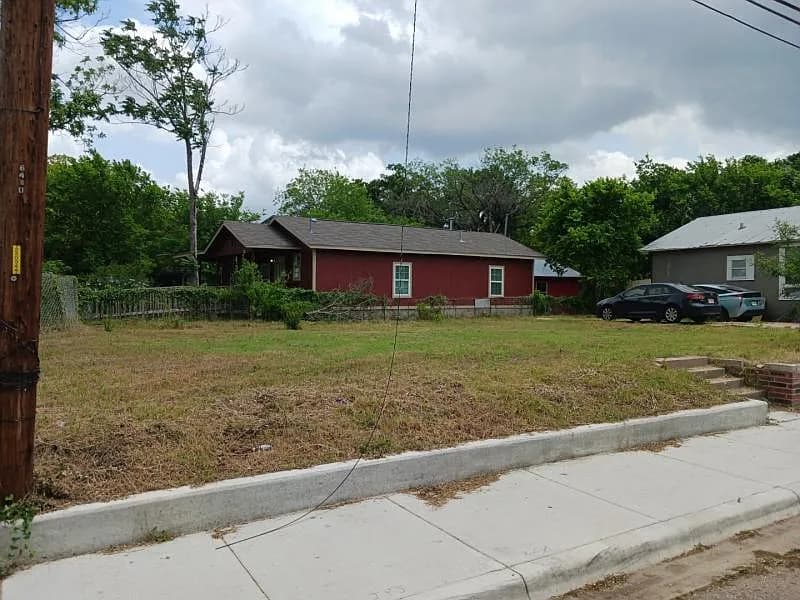
A vacant lot is the closest thing real estate offers to a blank page. No floor plan to work around, no prior owner's finishes to undo, no inspection report flagging a twenty-year-old roof. For buyers who want to build exactly the home they've pictured, that blank page is the entire appeal.
It's also the reason land purchases carry a different kind of risk than buying an existing home. There's no structure to inspect, which means the due diligence shifts entirely onto the ground itself — what's legally allowed to be built there, what utilities actually reach the property line, and whether the lot is what the listing says it is. Buyers who skip that work don't find out until they're already trying to pull a building permit.
This guide covers what to verify before buying vacant or raw land in and around Austin, and how the process differs from buying a home that already exists.
The Short Version
Before buying vacant land in Austin, confirm four things independently of the listing: zoning and permitted use, utility availability at the property line, floodplain and drainage status, and a current survey showing exact boundaries and easements. Austin-area lots range widely in price depending on location, size, and whether utilities are already in place — a cleared, utility-ready in-city lot commands a real premium over raw acreage requiring a well and septic system. Land typically closes faster than a home purchase, but the inspection period should be used for verification work, not skipped simply because there's no house to walk through.
Zoning: What You're Actually Allowed to Build
Zoning determines what can legally be built on a lot — single-family, duplex, multifamily, commercial, or a mix — and it is the single most important thing to confirm before buying land with a specific project in mind. A lot zoned for single-family use cannot simply be built out as a duplex because the buyer prefers that plan; zoning changes and variances are possible in some cases, but they take time, cost money, and are never guaranteed.
Within Austin's city limits, zoning can be verified directly through the City of Austin's zoning maps and the Development Services Department. For land in unincorporated Travis County or a neighboring county, the relevant county's planning department governs instead, and rules can differ meaningfully from city code — including whether zoning exists at all, since some unincorporated areas have limited or no zoning restrictions.
Deed restrictions and HOA covenants are a separate layer from zoning and can be more restrictive. A lot might be zoned for a use that its own subdivision's deed restrictions prohibit — minimum square footage requirements, architectural review, or restrictions on secondary structures are common in platted subdivisions. Always request and read the recorded deed restrictions, not just the zoning designation.
Utilities: What's at the Property Line vs. What's Actually Available
A listing that says "utilities available" is describing proximity, not a guarantee of easy, affordable connection. Buyers should verify, address by address: whether the lot is served by city water and sewer or will require a private well and septic system, the distance from the property line to the nearest water and sewer main if service isn't already stubbed to the lot, and whether electric and gas service require new utility easements or line extensions that the buyer, not a utility company, would pay for.
Septic systems require a percolation test to confirm the soil can support a septic field before a permit will be issued — a step worth completing during due diligence, not after closing. Well water availability and quality vary significantly by location even within the same general area, and a well permit and water quality test are reasonable contingencies to build into an offer on any lot without existing city water service.
Utility connection costs can be substantial on raw land far from existing infrastructure — sometimes tens of thousands of dollars to extend water or sewer service to a lot that looked simple on paper. This cost should be underwritten into the total project budget before the land purchase, not discovered afterward.
Floodplain and Drainage
Austin's terrain and its history of flash flooding make floodplain status a genuine due-diligence item, not a formality. FEMA flood maps, available through the City of Austin's floodplain mapping tools, show whether a specific lot sits within a mapped floodplain — and Austin also maintains its own, sometimes more conservative, local floodplain data that can differ from FEMA's maps in specific areas.
A lot in a mapped floodplain isn't automatically unbuildable, but it typically comes with additional requirements — elevated foundation requirements, floodplain development permits, and in some cases, buildable area restricted to only a portion of the lot. Buyers should confirm floodplain status early, since it materially affects both construction cost and design.
Drainage is a related but separate concern even outside a mapped floodplain: where does water go during heavy rain, and does the lot's grading direct it away from where a home would sit? A site visit during or shortly after a significant rain event tells a buyer more about a lot's real drainage behavior than a dry-day showing ever will.
The Survey: Verifying What You're Actually Buying
A current, professional survey is one of the most important documents in a land purchase, and it should never be assumed to match the listing's stated boundaries or acreage. A survey confirms the lot's exact boundaries, identifies any easements running through the property (utility, drainage, or access easements can significantly limit where a structure can actually be built), and flags any encroachments from neighboring structures or fences.
If the seller doesn't have a recent survey, budgeting for a new one during the due-diligence period is worth the cost — a survey is typically far less expensive than discovering after closing that a portion of the buildable area is encumbered by an easement the buyer didn't know existed.
How Land Purchases Differ From Buying an Existing Home
Land transactions typically close faster than home purchases, since there's no lender-required home inspection contingency and often a simpler loan process — many land purchases are financed with a land loan or paid in cash rather than a standard mortgage, since land loans carry different underwriting standards and typically require a larger down payment than a home loan.
But faster is not the same as simpler. Without a structure to inspect, the due-diligence period should be spent verifying the four items above — zoning, utilities, floodplain, and survey — rather than treated as a formality because there's no house to walk through. Buyers who use the full inspection period for this work protect themselves from the most common and costly land-purchase mistakes.
Pricing also works differently. Land value is driven primarily by location, size, zoning, and utility readiness rather than square footage or finishes — a smaller, utility-ready, cleared lot close to the urban core can command a higher price than a larger raw parcel farther out that requires well, septic, and a new electric line.
Land in Austin's Rapidly Appreciating Corridors
Vacant and cleared lots inside Austin's city limits — particularly in East Austin and other close-in neighborhoods that have seen significant redevelopment — represent a specific opportunity: the chance to build new construction in an established, appreciating area rather than compete for an existing home there. These lots tend to be smaller and command a real premium for location and utility access, but they remove the guesswork of renovating an older structure.
Buyers considering this path should compare the total cost of land plus construction against comparable existing homes in the same immediate area, since new construction costs in 2026 mean the math doesn't automatically favor building from scratch — it depends heavily on the specific lot, the scope of the build, and how much of a premium existing homes in that pocket already command.
A vacant lot rewards the buyer who does the verification work upfront and penalizes the one who doesn't. Zoning, utilities, floodplain, and survey aren't bureaucratic hurdles — they're the actual product being purchased, since there's no house to fall back on if any of the four turns out differently than assumed.
Current vacant land and resale listings are available to browse anytime.