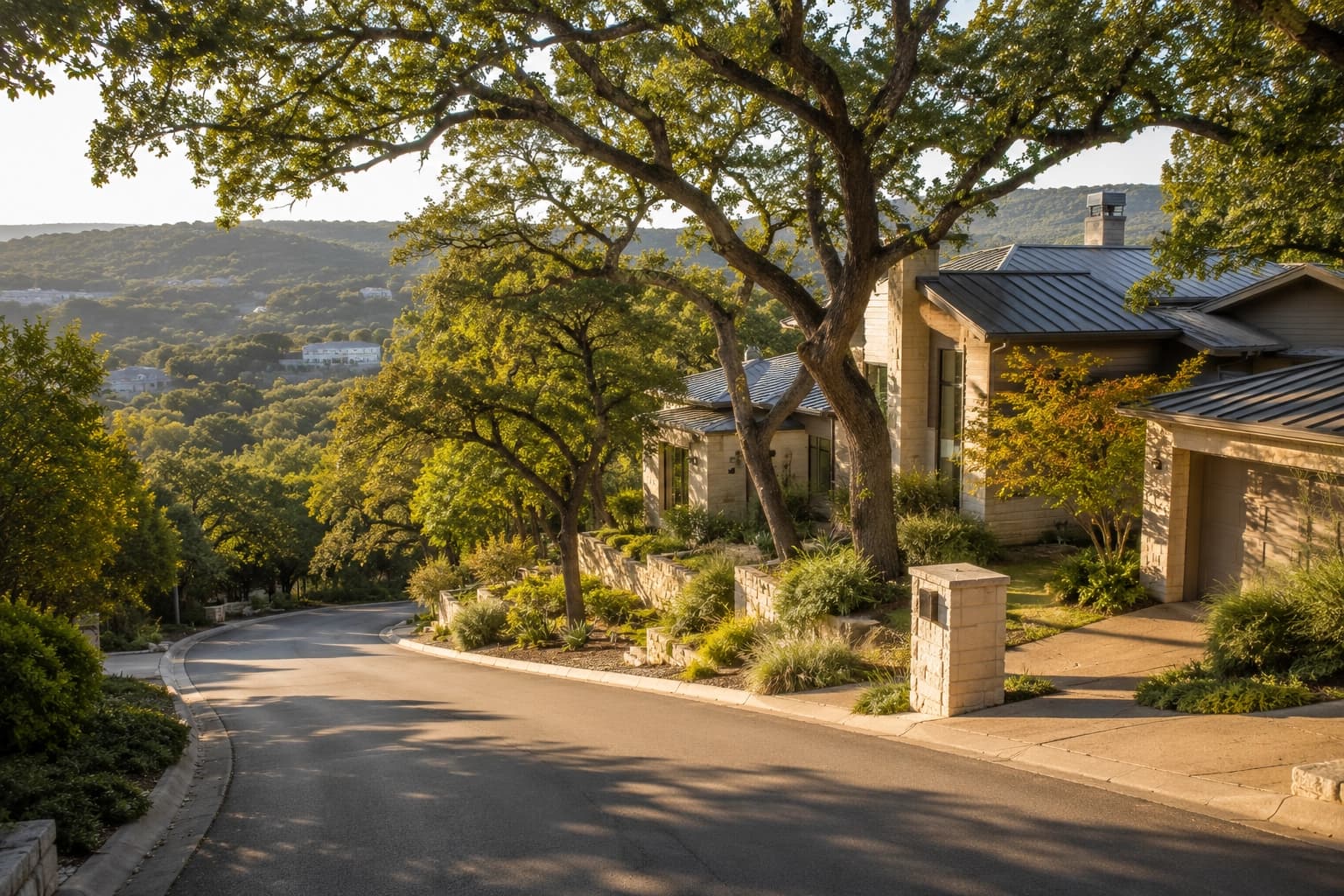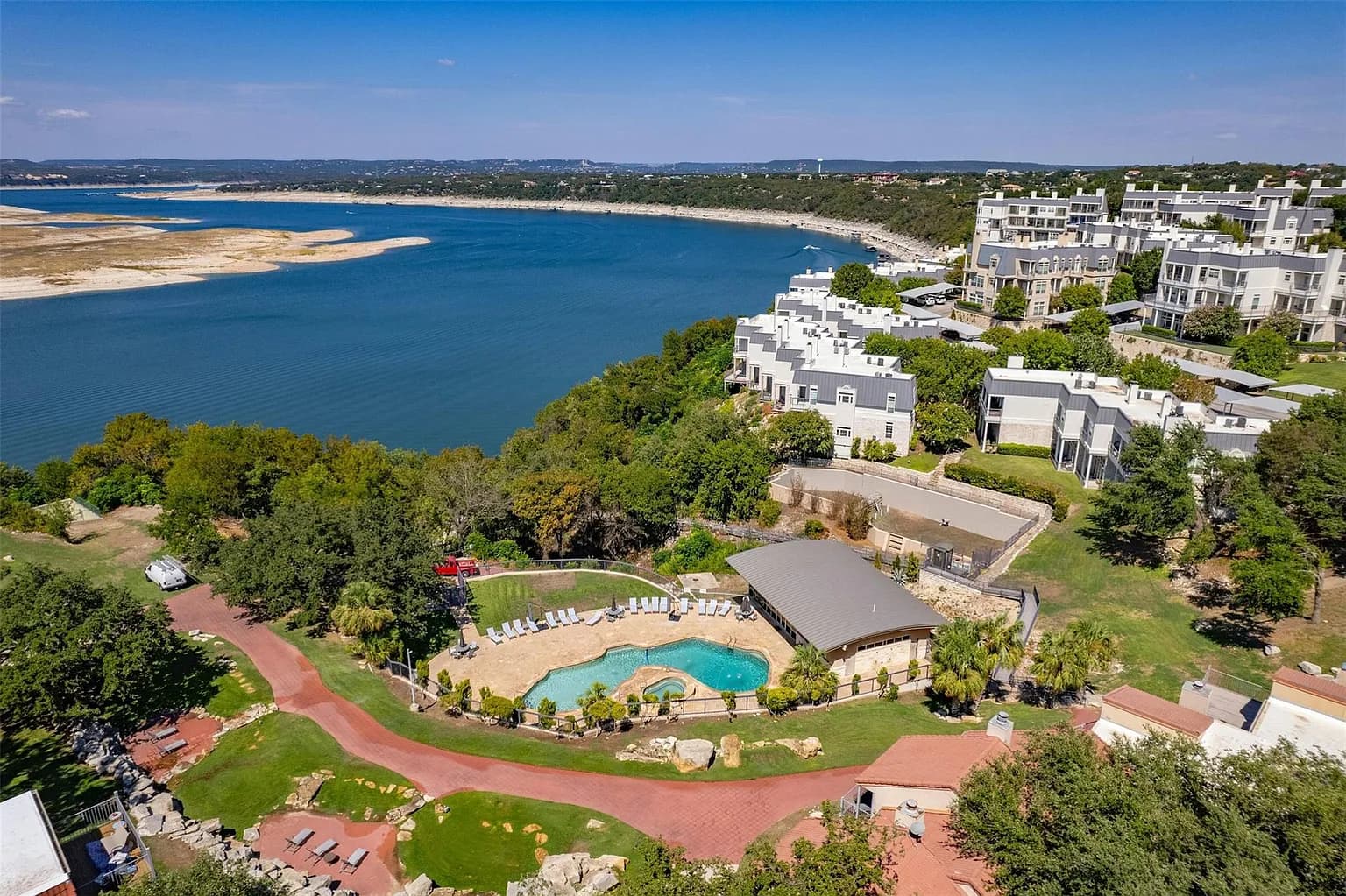
Ask ten Austin buyers what they picture when they hear "lake life," and most will describe some version of the same thing: a gate, a pool overlooking the water, and a pace of life that has nothing to do with downtown traffic. For a specific kind of buyer, that picture is exactly right — and it exists, real and buildable, along the Lake Travis corridor in and around Lakeway.
It is also a genuinely different purchase than buying inside Austin proper. The commute is longer, the HOA structures are more involved, and the lake itself behaves differently than most buyers expect. None of that makes it the wrong choice — it makes it a choice worth understanding clearly before you're comparing floor plans.
This guide covers what buyers actually need to know about the Lake Travis and Lakeway market: location and commute, schools, what condo living in a gated lake community really costs, how Lake Travis's water level works, and who this market tends to fit best.
The Short Version
Lakeway sits roughly 25 miles west of downtown Austin along RR 620, in Lake Travis Independent School District. It offers gated condo and townhome communities with shared amenities — pools, tennis courts, clubhouses, and private lake access — alongside single-family neighborhoods and direct waterfront estates. Condos in gated lake communities commonly start in the low $200,000s with HOA fees of $500 to $900 or more per month; single-family homes range from the $500,000s into the multi-millions for true waterfront. The trade-off buyers are making is consistent: distance from downtown in exchange for water, privacy, and a resort-style daily environment.
Where Lakeway Sits, and Why the Commute Matters
Lakeway occupies the south shore of Lake Travis along RR 620, roughly 25 miles west of downtown Austin. Depending on the specific address and route — RR 620, Bee Cave Road, or Highway 71 — the drive downtown typically runs 30 to 45 minutes outside of peak congestion, and can stretch longer during rush hour, since much of the corridor funnels through Bee Cave and West Lake Hills before reaching MoPac or Loop 360.
This is the single biggest trade-off buyers make when choosing Lakeway. It is not a neighborhood for someone who needs a fast, predictable downtown commute five days a week. It is a strong fit for buyers who work remotely, work locally within the Lakeway/Bee Cave corridor, are retired or semi-retired, or are willing to trade commute time for the lake lifestyle and are only in the office a few days a week.
Lake Travis Independent School District
Lakeway and most of the surrounding communities fall within Lake Travis Independent School District, a district that consistently earns strong state accountability ratings and has built a reputation — similar to Eanes ISD closer to Austin — as a draw in its own right for families relocating specifically for schools. Lake Travis ISD includes multiple elementary campuses feeding into Hudson Bend Middle School or Lake Travis Middle School, and ultimately Lake Travis High School.
Families moving to the area for schools should confirm the exact elementary and middle school zoning for a specific address before writing an offer, since boundaries within the district can shift a given property from one campus to another even a short distance away.
Condo Living in a Gated Lake Community
A meaningful share of Lakeway's inventory is condominium and townhome product inside gated communities — a different ownership experience than a standalone single-family home, and one that deserves its own explanation for buyers new to it. These communities typically include a manned or coded entry gate, a community pool (often more than one), tennis or pickleball courts, walking trails, and either private lake access or a shared marina/dock area.
The appeal is straightforward: resort-style amenities, low exterior maintenance, and often genuine lake or hill country views, at a lower entry price than a comparable single-family lakefront home. The trade-off is equally straightforward: less privacy than a standalone home, HOA rules governing exterior changes and rentals, and a meaningfully higher monthly carrying cost than a typical Austin condo.
HOA Fees: What They Cover and Why They're Higher Here
Buyers coming from inside Austin proper are sometimes surprised by HOA fees in gated Lake Travis communities, which commonly run $500 to $900 or more per month — noticeably higher than a typical in-city condo HOA. That fee is not simply higher for no reason; in most of these communities it covers building and grounds maintenance, master insurance on shared structures, staffed or gated security, pool and amenity upkeep, and in some communities, water and sewer service bundled into the fee rather than billed separately.
Before making an offer on any condo in a gated Lake Travis community, request the HOA's most recent financial statements, reserve study, and rules governing rentals — some communities restrict short-term rentals or cap the number of units that can be leased at any given time, which matters directly if investment or rental income is part of your plan.
Understanding Lake Travis Water Levels
Lake Travis is a managed reservoir on the Colorado River, and its water level is not constant — it rises and falls seasonally and across multi-year drought and rainfall cycles, managed by the Lower Colorado River Authority for flood control, water supply, and downstream needs. In wetter years, the lake sits near or at its normal operating level; during sustained drought, levels can drop significantly, exposing shoreline that is normally underwater.
This matters directly for any purchase involving a private dock, boat slip, or direct waterfront access — a dock that reaches deep water at full pool may sit on dry ground during a low-water year. Buyers considering a property specifically for its water access should ask sellers and local advisors about the property's water access at both high and low lake levels, not just its condition on the day of the showing.
Single-Family Homes vs. Condos on the Lake
Single-family homes in and around Lakeway span a wide range — from established, more modest homes in the $500,000s to $700,000s away from the immediate shoreline, up to multi-million-dollar direct waterfront estates with private docks. Buyers choosing between a condo and a single-family home in this market are typically weighing the same factors as anywhere else — privacy, land, and exterior maintenance responsibility — but with lake access as an added variable that can sit on either side of that decision depending on the specific property.
A gated condo community can offer shared lake access and amenities at a fraction of the cost of a comparable single-family waterfront home, which makes it a genuinely efficient way to buy into the lake lifestyle for buyers who don't need a private dock of their own.
Who Lakeway Actually Fits
Lakeway tends to fit buyers prioritizing a resort-style, lower-maintenance lifestyle over downtown proximity — retirees and semi-retirees, remote workers, second-home buyers, and families who have decided that Lake Travis ISD and a slower daily pace outweigh a shorter commute. It also fits buyers specifically drawn to the amenities of gated condo living — pools, tennis, and a maintained community environment — who may not need a large single-family lot to be satisfied with the purchase.
It is a less natural fit for buyers whose daily schedule requires a short, predictable downtown commute, or for buyers unfamiliar with HOA-governed living who haven't yet reviewed what a $500-$900 monthly fee is actually buying them.
The Lake Travis corridor is not a smaller, cheaper version of central Austin — it's a different kind of daily life, built around water, privacy, and amenities rather than urban proximity. For the right buyer, that trade is an easy one to make once the commute, schools, HOA structure, and lake mechanics are genuinely understood rather than assumed.
Current Lake Travis and Lakeway-area listings are available to browse anytime.